




Islamic Culture and the Medical Arts
Visual Catalog of the Illustrations (Part 5/9)
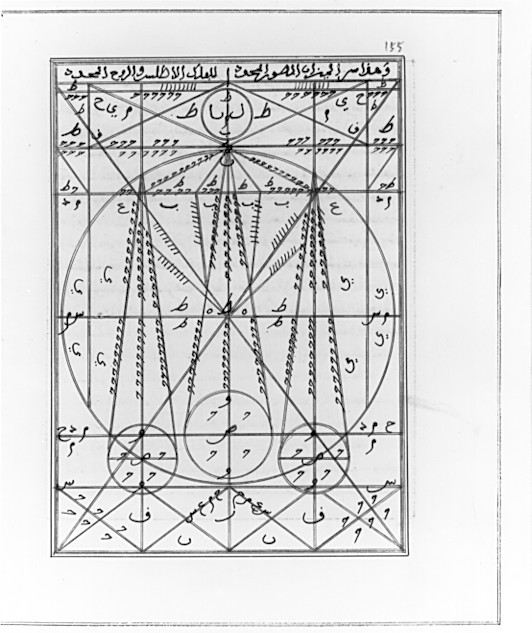
A chart used to determine the `balance' of a substance's attributes. From the alchemical treatise by `Izz al-Din Aydamir al-Jildaki (d. 1342/743 H). Undated copy made in Morocco in the late 19th century.
NLM MS A7, part 1, fol. 155b

An illuminated opening from the alchemical treatise The Proof Regarding Secrets of the Science of the Balance (Kitab al-Burhan fi asrar `ilm al-mizan) by `Izz al-Din Aydamir al-Jildaki (d. 1342/743 H). Undated copy made in Morocco in the late 19th century.
NLM MS A7, part 1, fols. 1b-2a
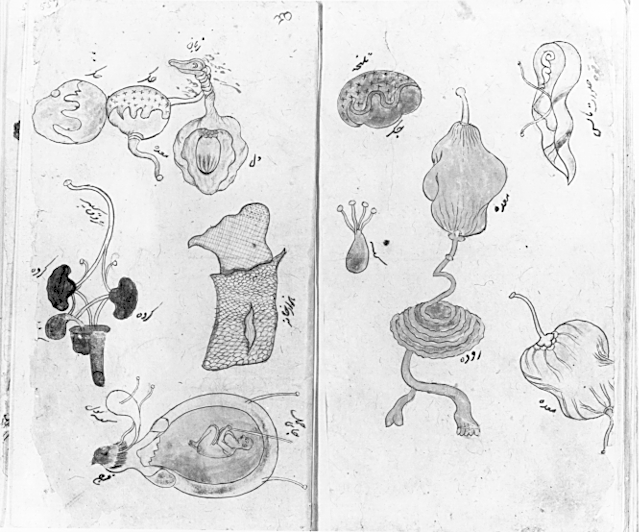
Individual organs drawn in inks and opaque watercolors. Two of six leaves of anatomical drawings appended to a Persian translation of an Arabic medical compendium. On the righthand page are the liver with gallbladder, the stomach with intestines, the testicles, and detail of the stomach. On the left are a composite rendering of the tongue, larynx, heart, trachea, stomach and liver; a composite drawing of the ureters, urethra, kidneys, testicles, and penis; and a composite rendering of the bladder with female genitalia, womb and foetus. Undated, probably 18th century India.
NLM MS P20, fols. 556-557a
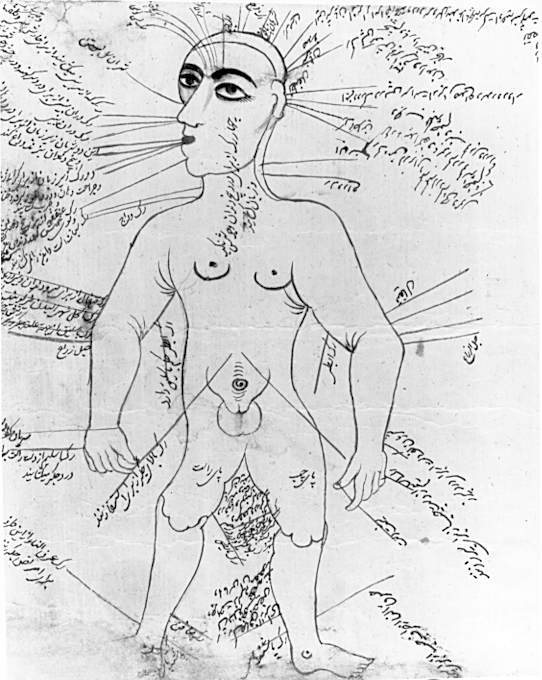
A loose sheet with a bloodletting figure having points labeled that were thought best for phlebotomy. Such figures are derivative from late medieval European bloodletting figures. Undated, probably 18th century
NLM MS P5, fol. A
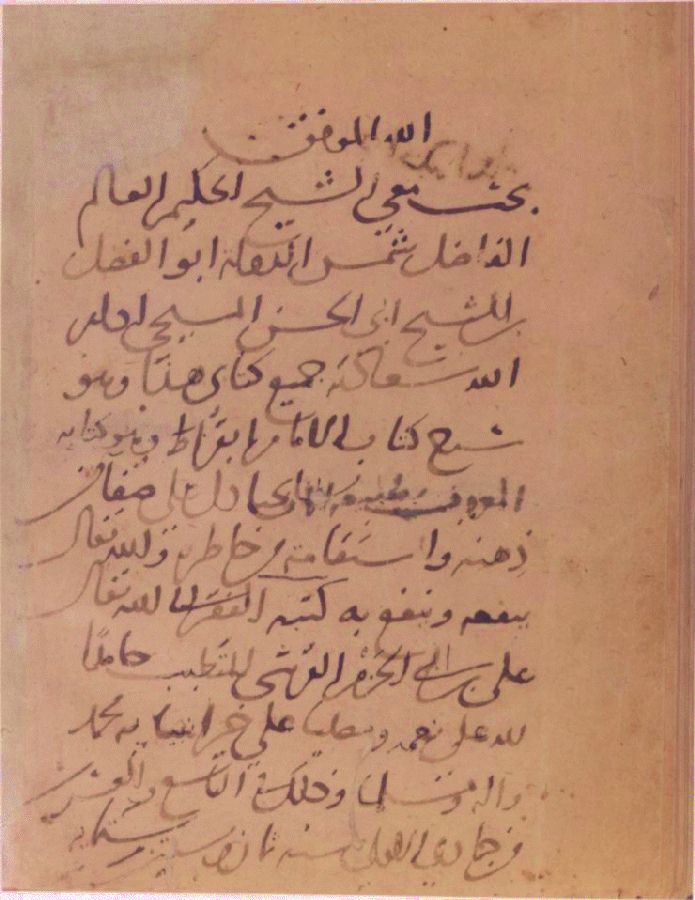
The signed statement made by Ibn al-Nafis (d. 1288/687 H) that his student, a Christian named Shams al-Dawlah Abu al-Fadl ibn Abi al-Hasan al-Masihi, had read and mastered Ibn al-Nafis's commentary on a Hippocratic treatise. The certificate is in the handwriting of Ibn al-Nafis himself and dated the 29th of Jumada I in 668 H (25 January 1270).
NLM MS A69, fol. 67b
![There is an illuminated opening on folio [5b] executed in gilt with blue, light-green, white, and red opaque watercolors. The text is written within a gilt and black border; on the other folios the text is written within a frame formed of a single red line that in turn is set within an outer frame of a single red line. The text area has been frame-ruled.](image/image36.gif "The illuminated opening of the Arabic treatise on Paracelsian medicine, The Culmination of Perfection in the Treatment of the Human Body (Ghayat al-itqan fi tadbir badan al-insan), written in the 17th century by Ibn Sallum. A provincial Ottoman copy finished 26 October 1749 (2 Sha`ban 1162 H) by scribe Sami` Mustafa Efendi al-Sha`ir. NLM MS A13, fol. [5b]")
The illuminated opening of the Arabic treatise on Paracelsian medicine, The Culmination of Perfection in the Treatment of the Human Body (Ghayat al-itqan fi tadbir badan al-insan), written in the 17th century by Ibn Sallum. A provincial Ottoman copy finished 26 October 1749 (2 Sha`ban 1162 H) by scribe Sami` Mustafa Efendi al-Sha`ir.
NLM MS A13, fol. [5b].
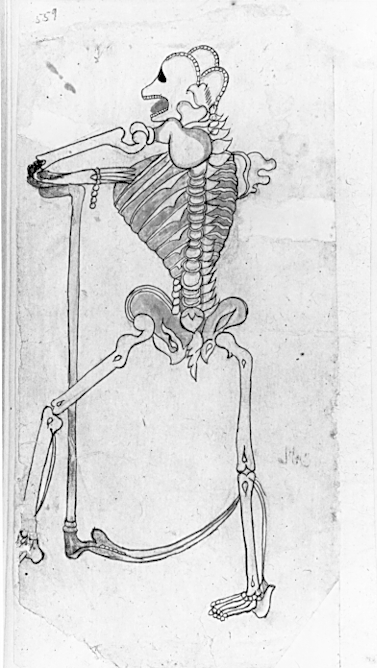
A drawing in ink and light gray wash of a skeleton leaning on a scythe. One of six leaves of anatomical drawings appended to a Persian translation of an Arabic medical compendium, showing some knowledge of the illustrations of Vesalius's Fabrica. Undated, probably 18th century India.
NLM MS P20, fol. 559a
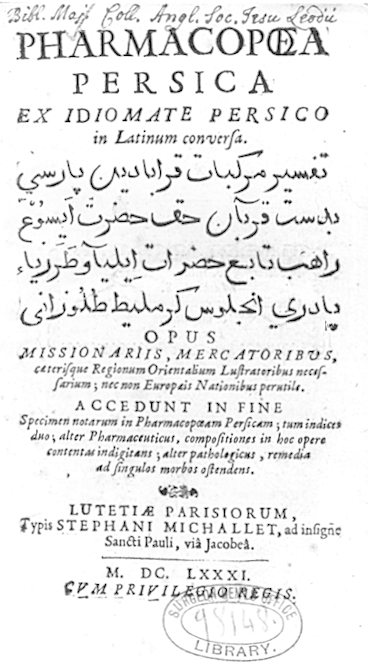
Frontispage of Pharmacopoea Persica ex idiomate Persica in Latinum conversa, published in Paris in 1681. The treatise consists of a Latin translation, with comments, made by Father Angelus de Sanctu Josepho [Joseph Labrosse] of a Persian book on compound remedies by Muzaffar ibn Muhammad al-Husayni.
Last Reviewed: December 15, 2011