



Overview
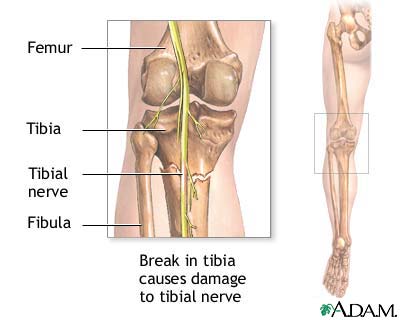
Tibial nerve dysfunction occurs when there is damage to the tibial nerve. Symptoms can include numbness, pain, tingling, and weakness of the knee or foot. The tibial nerve is commonly injured by fractures or other injury to the back of the knee or the lower leg. It may be affected by systemic diseases such as diabetes mellitus. The nerve can also be damaged by pressure from a tumor, abscess, or bleeding into the knee. Treatment usually depends upon finding the source of the tibial nerve damage.
Review Date 1/28/2021
Updated by: Evelyn O. Berman, MD, Assistant Professor of Neurology and Pediatrics at University of Rochester, Rochester, NY. Review provided by VeriMed Healthcare Network. Also reviewed by David Zieve, MD, MHA, Medical Director, Brenda Conaway, Editorial Director, and the A.D.A.M. Editorial team.