



Overview
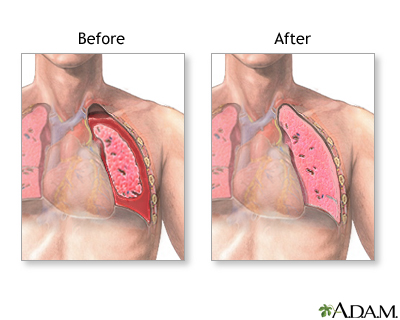
Recovery from the chest tube insertion and removal is usually complete, with only a small scar.
The patient will stay in the hospital until the chest tube is removed. While the chest tube is in place, the nursing staff will carefully check for possible air leaks, breathing difficulties, and need for additional oxygen. Frequent deep breathing and coughing is necessary to help re-expand the lung, assist with drainage, and prevent normal fluids from collecting in the lungs.
Review Date 8/26/2023
Updated by: Jatin M. Vyas, MD, PhD, Associate Professor in Medicine, Harvard Medical School; Associate in Medicine, Division of Infectious Disease, Department of Medicine, Massachusetts General Hospital, Boston, MA. Also reviewed by David C. Dugdale, MD, Medical Director, Brenda Conaway, Editorial Director, and the A.D.A.M. Editorial team.