



Overview
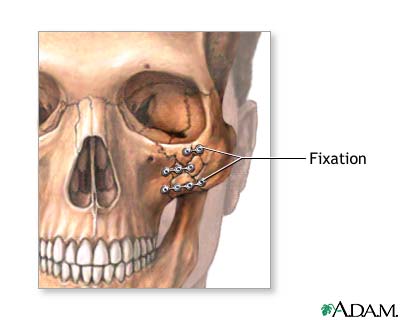
While the patient is deep asleep and pain-free (under general anesthesia) some of the facial bones are cut and repositioned into a more normal facial structure. The procedure may take from four to 14 hours to complete. Pieces of bone (bone grafts) may be taken from the pelvis, ribs, or skull to fill in the spaces where bones of the face and head have been moved. Small metal screws and plates are sometimes be used to hold the bones in place and the jaw may be wired together to hold the new bone positions in place.
If the surgery is expected to cause significant swelling of the face, mouth, or neck, the patient's airway may be an area of major concern. The airway tube (endotracheal tube) normally used for long surgical procedures under general anesthesia may be replaced with an opening and tube directly into the airway (trachea) in the neck (tracheotomy).
Review Date 5/26/2023
Updated by: Tang Ho, MD, Associate Professor, Division of Facial Plastic and Reconstructive Surgery, Department of Otolaryngology - Head and Neck Surgery, The University of Texas Medical School at Houston, Houston, TX. Also reviewed by David C. Dugdale, MD, Medical Director, Brenda Conaway, Editorial Director, and the A.D.A.M. Editorial team.