



Anterior vaginal wall repair (surgical treatment of urinary incontinence) - series—Procedure, Part 1
Overview
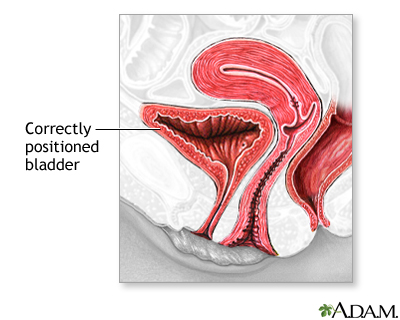
To perform the anterior vaginal repair, an incision is made through the vagina to release a portion of the anterior (front) vaginal wall that is attached to the base of the bladder. The bladder and urethra are then stitched into the proper position. There are several variations on this procedure that may be necessary based on the severity of the dysfunction. This procedure may be performed using general or spinal anesthesia. You may have a foley catheter in place for one to two days after surgery. You will be given a liquid diet immediately after surgery, followed by a low residue diet when your normal bowel function has returned. Stool softeners and laxatives may be prescribed to prevent straining with bowel movements since this can cause stress on the incision.
Review Date 4/10/2022
Updated by: Kelly L. Stratton, MD, FACS, Associate Professor, Department of Urology, University of Oklahoma Health Sciences Center, Oklahoma City, OK. Also reviewed by David C. Dugdale, MD, Medical Director, Brenda Conaway, Editorial Director, and the A.D.A.M. Editorial team.