



Anterior vaginal wall repair (surgical treatment of urinary incontinence) - series—Procedure, Part 2
Overview
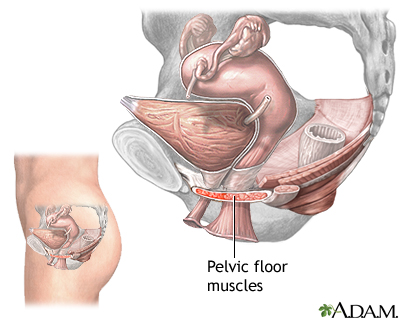
Women treated with this procedure have approximately a 60% rate of success in relieving symptoms. You should avoid activities that cause an increase in abdominal pressure, such as straining, sneezing, and coughing. Try to tighten your pelvic muscles when coughing or sneezing to support the bladder. You may need to urinate at least every 2 to 3 hours, or perform clean intermittent self catheterization (CISC), to keep your bladder from getting too full and putting pressure on the stitches. You should avoid any activities that require lifting or straining. You may need to take stool softeners or gentle laxatives to prevent constipation and straining with bowel movements.
Review Date 4/10/2022
Updated by: Kelly L. Stratton, MD, FACS, Associate Professor, Department of Urology, University of Oklahoma Health Sciences Center, Oklahoma City, OK. Also reviewed by David C. Dugdale, MD, Medical Director, Brenda Conaway, Editorial Director, and the A.D.A.M. Editorial team.