



- Go to slide 1 out of 5
- Go to slide 2 out of 5
- Go to slide 3 out of 5
- Go to slide 4 out of 5
- Go to slide 5 out of 5
Overview
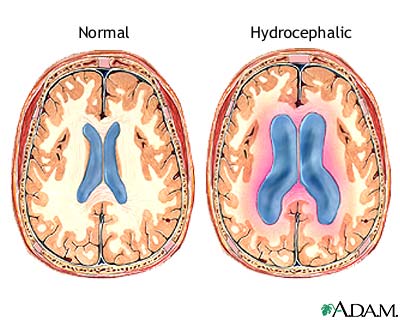
In hydrocephalus, the ventricles of the brain become enlarged with cerebrospinal fluid. This condition causes the brain tissue to become compressed against the skull, thus causing serious neurological problems. Shunting, called ventriculoperitoneal shunting, is necessary to drain the excess fluid and relieve the pressure in the brain. This should be done as soon as hydrocephalus is recognized to give the child the best possible neurological outlook.
Review Date 11/9/2021
Updated by: Joseph V. Campellone, MD, Department of Neurology, Cooper Medical School at Rowan University, Camden, NJ. Review provided by VeriMed Healthcare Network. Also reviewed by David Zieve, MD, MHA, Medical Director, Brenda Conaway, Editorial Director, and the A.D.A.M. Editorial team.