



Overview
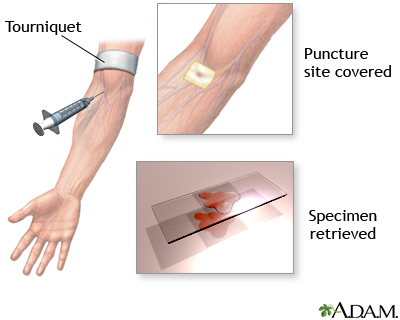
A CBC requires a small blood specimen. Blood is drawn from a vein, usually from the inside of the elbow or the back of the hand.
Preparation: The skin should be cleaned with alcohol or iodine before the test. The patient should be seated comfortably or reclining.
How the test will feel:
When the needle is inserted to draw blood, some people feel moderate pain, while others feel only a prick or stinging sensation. After the blood is drawn, there may be some throbbing.
Although the CBC test is very safe, any blood drawing has a slight risk of complication, including:
- Oozing of blood from puncture site
- Fainting or feeling lightheaded
- Hematoma (blood accumulating under the skin)
- Multiple punctures to locate veins
- Infection (a slight risk any time the skin is broken)
Review Date 10/16/2022
Updated by: Mark Levin, MD, Hematologist and Oncologist, Monsey, NY. Review provided by VeriMed Healthcare Network. Also reviewed by David C. Dugdale, MD, Medical Director, Brenda Conaway, Editorial Director, and the A.D.A.M. Editorial team.