



Overview
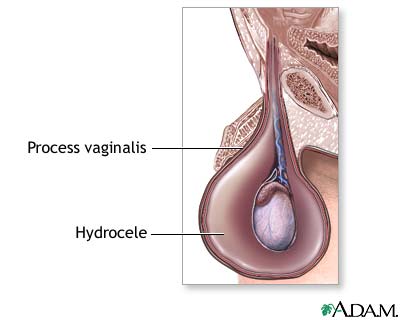
When the processus vaginalis does not close, or closes after fluid from the abdomen has become trapped in the scrotal cavity, it is called a hydrocele. The canal (inguinal canal) between the abdominal cavity (peritoneum) and the scrotum remains open. Fluid from the peritoneum enters the canal and the scrotum, and causes swelling of the scrotum. In some cases, bowel can also pass through the processus vaginalis into the scrotum. This is called an inguinal hernia. If a hydrocele persists past the first 6 to 12 months of life, it should be surgically repaired. Inguinal hernia in infants is usually repaired within the first 3 months of life. It is sometimes difficult to distinguish a hydrocele from an inguinal hernia on exam.
Review Date 1/1/2023
Updated by: Kelly L. Stratton, MD, FACS, Associate Professor, Department of Urology, University of Oklahoma Health Sciences Center, Oklahoma City, OK. Also reviewed by David C. Dugdale, MD, Medical Director, Brenda Conaway, Editorial Director, and the A.D.A.M. Editorial team.