



Page 1 of 1
Classification Preference
- Works are generally classified in this order of preference:
- With the disease, or
- With the organ or region chiefly affected, or
- With the special form of therapy, diagnostic procedure, or environmental condition as a cause of disease, etc., if disease is mentioned peripherally
Classification by Disease
- Some organ disease headings have separate class numbers. In addition, some may have additional class numbers for subtopics such as diagnosis or therapy
- Example:
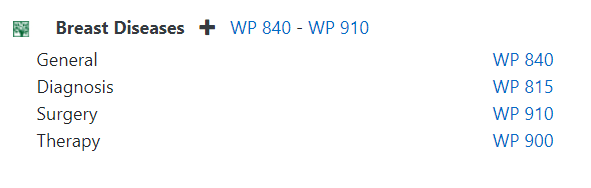
- Example:
- Class general diseases of an organ in the class number for the organ if no separate number is available, unless otherwise instructed
- Works about up to three diseases go with the disease given most emphasis or the one discussed first
- Exception: Diagnosis of diseases of famous persons, derived from records, memoirs, letters, portraits, etc. is classed in WZ 313
Classification by Region/Organ
- A work dealing with a particular region of the body or an organ is classified with the region or organ system, depending on the emphasis of the work
- For example:
- General works on the head and neck are classed with the musculoskeletal system in the WE schedule
- When the emphasis concerns dental problems and procedures related to the mouth, teeth, and jaws, the work is classed in WU with Dentistry. If the emphasis concerns the otolaryngological problems and procedures, related to the ear, nose, and throat, the work is classified in the WV schedule with Otolaryngology. If the emphasis is on the Brain and associated organs, the work is classified in WL with the Nervous System
- For example:
Procedures
- If the work is about a special form of therapy, diagnostic procedure, or environmental condition as a cause of disease, etc., and the disease is only mentioned in the context of the primary subject (the therapy, etc.), classify as always for the primary subject. Generally, class the reversal of a medical procedure in the same number as the procedure itself, if no separate number exists
Last Reviewed: April 16, 2021