



Wheezing is a high-pitched whistling sound during breathing. It occurs when air moves through narrowed breathing tubes in the lungs.
Considerations
Wheezing is a sign that a person may be having breathing problems. The sound of wheezing is most obvious when breathing out (exhaling). It may also be heard when breathing in (inhaling).
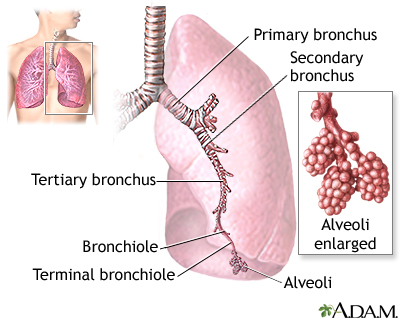
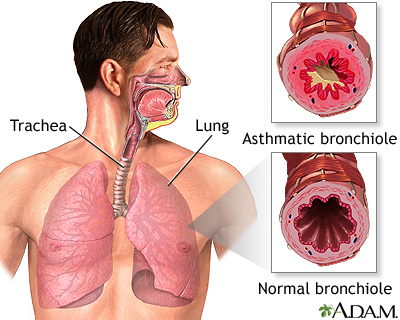
Wheezing most often comes from the small breathing tubes (bronchial tubes) deep in the lungs. But it may be due to a blockage in larger airways or in people with certain vocal cord problems.
Causes
Causes of wheezing may include any of the following:
- Asthma
- Breathing a foreign object into the airways to the lungs
- Damage and widening of the large airways in the lungs (bronchiectasis)
- Swelling and mucus buildup in the smallest air passages in the lungs (bronchiolitis)
- Swelling and mucus buildup in the main passages that carry air to the lungs (bronchitis)
- COPD (chronic obstructive pulmonary disease), especially when a respiratory infection is present
- Acid reflux disease
- Heart failure (cardiac asthma)
- Insect sting that causes an allergic reaction
- Certain medicines (particularly aspirin)
- Infection of the lungs (pneumonia)
- Smoking
- Viral infection, especially in infants younger than age 2
Home Care
Take all of your medicines as directed.
Sitting in an area where there is moist, heated air may help relieve some symptoms. This can be done by running a hot shower or using a vaporizer.
When to Contact a Medical Professional
Call your health care provider if wheezing:
- Occurs for the first time
- Occurs with significant shortness of breath, bluish skin, confusion, or mental status changes
- Keeps occurring without explanation
- Is caused by an allergic reaction to a bite or medicine
If wheezing is severe or occurs with severe shortness of breath, you should go directly to the nearest emergency department.
What to Expect at Your Office Visit
The provider will perform a physical exam and ask about your medical history and symptoms. Questions about your wheezing may include when it started, how long it has lasted, when it is worse, and what might have caused it.
The physical exam may include listening to the lung sounds (auscultation). If your child has the symptoms, the provider will make sure your child didn't swallow a foreign object.
Tests that may be done include:
- Blood tests, possibly including arterial blood gases
- Chest x-ray
- Lung function tests
A hospital stay may be needed if:
- Breathing is particularly difficult
- Medicines need to be given through a vein (IV)
- Supplemental oxygen is required
- The person needs to be closely watched by medical personnel
Alternative Names
Sibilant rhonchi; Wheezing asthma; Wheezing - bronchiectasis; Wheezing - bronchiolitis; Wheezing - bronchitis; Wheezing - COPD; Wheezing - heart failure


References
Kliegman RM, St. Geme JW, Blum NJ, Shah SS, Tasker RC, Wilson KM. Wheezing, bronchiolitis, and bronchitis. In: Kliegman RM, St. Geme JW, Blum NJ, Shah SS, Tasker RC, Wilson KM, eds. Nelson Textbook of Pediatrics. 21st ed. Philadelphia, PA: Elsevier; 2020:chap 418.
Woodruff PG, Bhakta NR, Ortega VE, Lambrecht BN, Fahy JV. Asthma: pathogenesis and phenotypes. In: Broaddus VC, Ernst JD, King TE, et al, eds. Murray and Nadel's Textbook of Respiratory Medicine. 7th ed. Philadelphia, PA: Elsevier; 2022:chap 60.
Review Date 6/7/2022
Updated by: Neil K. Kaneshiro, MD, MHA, Clinical Professor of Pediatrics, University of Washington School of Medicine, Seattle, WA. Also reviewed by David C. Dugdale, MD, Medical Director, Brenda Conaway, Editorial Director, and the A.D.A.M. Editorial team.