



Overview
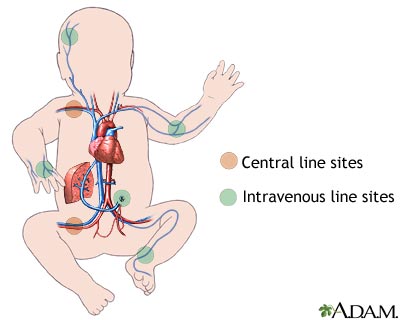
Intravenous (IV) lines are often placed into a vein in the hand, foot, or scalp of babies who are too sick to get all of their feedings and fluids by mouth. The belly button also has a large vessel that may be used for intravenous fluids. Sometimes a large IV called a central line or PICC line is placed by sterile technique or by surgery to provide long-term, highly concentrated intravenous fluid.
Review Date 4/25/2023
Updated by: Charles I. Schwartz, MD, FAAP, Clinical Assistant Professor of Pediatrics, Perelman School of Medicine at the University of Pennsylvania, General Pediatrician at PennCare for Kids, Phoenixville, PA. Also reviewed by David C. Dugdale, MD, Medical Director, Brenda Conaway, Editorial Director, and the A.D.A.M. Editorial team.