



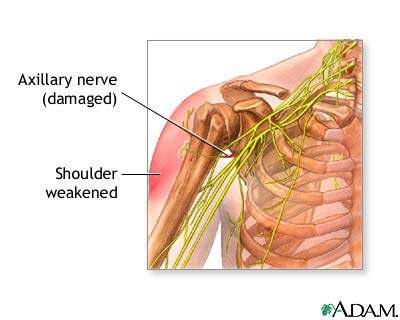
Overview
Conditions associated with axillary nerve dysfunction include fracture of the humerus (upper arm bone), pressure from casts or splints, and improper use of crutches. Other causes include systemic disorders that cause neuritis (inflammation of nerves). If the cause of the axillary nerve dysfunction can be identified and successfully treated, there is a possibility of full recovery. The extent of disability varies. The worst problem most often is shoulder weakness.
Review Date 1/23/2023
Updated by: Joseph V. Campellone, MD, Department of Neurology, Cooper Medical School of Rowan University, Camden, NJ. Review provided by VeriMed Healthcare Network. Also reviewed by David C. Dugdale, MD, Medical Director, Brenda Conaway, Editorial Director, and the A.D.A.M. Editorial team.