



Overview
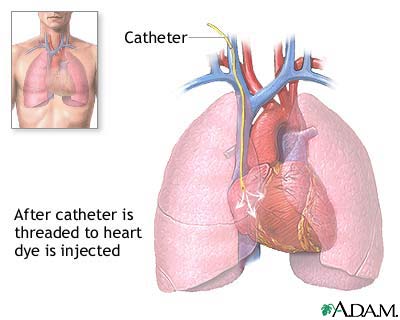
Cardiac catheterization is used to study the various functions of the heart or to obtain diagnostic information about the heart or its vessels. A small incision is made in an artery or vein in the arm, neck, or groin. The catheter is threaded through the artery or vein into the heart. X-ray images called fluoroscopy are used to guide the insertion. When the catheter is in place, dye is injected to visualize the structures and vessels within the heart.
Review Date 5/8/2022
Updated by: Michael A. Chen, MD, PhD, Associate Professor of Medicine, Division of Cardiology, Harborview Medical Center, University of Washington Medical School, Seattle, WA. Also reviewed by David C. Dugdale, MD, Medical Director, Brenda Conaway, Editorial Director, and the A.D.A.M. Editorial team.