



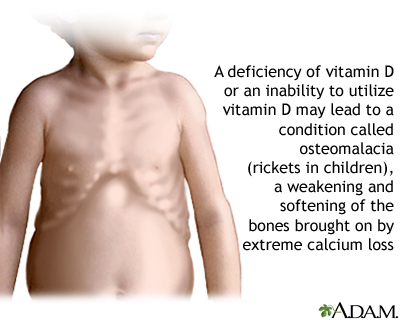
Osteomalacia is softening of the bones. It most often occurs because of a problem with vitamin D, which helps your body absorb calcium. Your body needs calcium to maintain the strength and hardness of your bones.
In children, the condition is called rickets.
Causes
A lack of the proper amount of calcium in the blood can lead to weak and soft bones. Low blood calcium can be caused by low vitamin D level in the blood.
Vitamin D is absorbed from food or produced by the skin when exposed to sunlight. Lack of vitamin D produced by the skin may occur in people who:
- Live in climates with little exposure to sunlight
- Must stay indoors
- Work indoors during the daylight hours
- Wear clothes that cover most of their skin
- Have dark skin pigmentation
- Use very strong sunscreen
You may not get enough vitamin D from your diet if you:
- Are lactose intolerant (have trouble digesting milk products)
- Do not eat or drink milk products (more common in older adults)
- Follow a vegetarian diet
- Are not able to absorb vitamin D well in the intestines, such as after gastric bypass surgery or due to a gastrointestinal disease
Other conditions that may cause osteomalacia include:
- Cancer -- rare tumors that cause low phosphate level in the kidney
- Kidney failure and acidosis
- Lack of enough phosphates in the diet
- Liver disease -- the liver cannot convert vitamin D to its active form
- Side effects of medicines used to treat seizures
Symptoms
Symptoms include:
- Bone fractures that happen without a real injury
- Muscle weakness
- Widespread bone pain, especially in the hips
Symptoms may also occur due to low calcium level. These include:
- Numbness around the mouth
- Numbness or tingling of the arms and legs
- Spasms or cramps of the hands or feet
Exams and Tests
Blood tests will be done to check vitamin D, creatinine, calcium, phosphate, electrolyte, alkaline phosphatase, and parathyroid hormone levels.
Bone x-rays and a bone density test can help detect pseudofractures, bone loss, and bone softening. More importantly, osteomalacia can look like weakening of the bones from osteoporosis on bone density testing.
In some cases, a bone biopsy will be done to see if bone softening is present.
Treatment
Treatment may involve vitamin D, calcium, and phosphorus supplements taken by mouth. People who cannot absorb nutrients well through the intestines may need larger doses of vitamin D and calcium. This includes people who have some types of weight loss surgery.
People with certain conditions may need regular blood tests to monitor blood levels of phosphorus and calcium.
Outlook (Prognosis)
Some people with vitamin deficiency disorders will get better within a few weeks. With treatment, healing should happen within 6 months.
Possible Complications
Symptoms can return.
When to Contact a Medical Professional
Contact your health care provider if you have symptoms of osteomalacia, or if you think that you may be at risk for this disorder.
Prevention
Eating a diet rich in vitamin D and calcium and getting sufficient exposure to sunlight can help prevent osteomalacia due to vitamin D deficiency.
Alternative Names
Vitamin D deficiency - osteomalacia; Calcium - osteomalacia
Images


References
Bhan A, Rao AD, Bhadada SK, Rao SD. Rickets and osteomalacia. In Melmed S, Auchus RJ, Goldfine AB, Koenig RJ, Rosen CJ, eds. Williams Textbook of Endocrinology. 14th ed. Philadelphia, PA: Elsevier; 2020:chap 31.
Chonchol M, Smogorzewski MJ, Stubbs JR, Yu ASL. Disorders of calcium homeostasis. In: Yu ASL, Chertow GM, Luyckx VA, Marsden PA, Skorecki K, Taal MW, eds. Brenner and Rector's The Kidney. 11th ed. Philadelphia, PA: Elsevier; 2020:chap 18.
Demay MB, Krane SM. Disorders of mineralization. In: Jameson JL, De Groot LJ, de Kretser DM, et al, eds. Endocrinology: Adult and Pediatric. 7th ed. Philadelphia, PA: Elsevier Saunders; 2016:chap 71.
Weinstein RS. Osteomalacia and rickets. In: Goldman L, Schafer AI, eds. Goldman-Cecil Medicine. 26th ed. Philadelphia, PA: Elsevier; 2020:chap 231.
Review Date 4/29/2022
Updated by: Sandeep K. Dhaliwal, MD, board-certified in Diabetes, Endocrinology, and Metabolism, Springfield, VA. Also reviewed by David C. Dugdale, MD, Medical Director, Brenda Conaway, Editorial Director, and the A.D.A.M. Editorial team.