



Overview
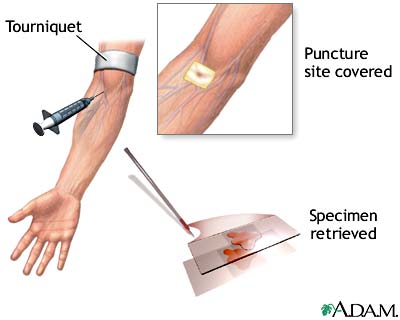
Because of the sporadic release of GH, the patient will have his blood drawn a total of five times over a few hours. Instead of the traditional method of blood drawing (veinipuncture), the blood is taken through an IV (angiocatheter).
How to prepare for the test:
You should fast and limit physical activity for 10 to 12 hours before the test. If you are taking certain medications, your health-care provider may ask that you withhold these before the test, as some can affect results.
You will be asked to relax for at least 90 minutes before the test, as exercise or increased activity can alter hGH levels.
If your child is to have this test performed it may be helpful to explain how the test will feel, and even practice or demonstrate on a doll. This test requires temporary placement of an angiocatheter, an IV, and this should be explained to your child. The more familiar your child is with what will happen to him, and the purpose for the procedure, the less anxiety he will feel.
How the test will feel:
When the needle is inserted, some people feel moderate pain, while others feel only a prick or stinging sensation. Afterward, there may be some throbbing.
Risks associated with venipuncture are slight:
- Excessive bleeding
- Fainting, feeling lightheaded
- Hematoma (blood accumulating under the skin)
- Infection (a slight risk any time the skin is broken)
- Multiple punctures to locate veins
- Clinical signs and symptoms of hypoglycemia if IV insulin is administered
Review Date 1/9/2022
Updated by: Robert Hurd, MD, Professor of Endocrinology and Health Care Ethics, Xavier University, Cincinnati, OH. Review provided by VeriMed Healthcare Network. Also reviewed by David Zieve, MD, MHA, Medical Director, Brenda Conaway, Editorial Director, and the A.D.A.M. Editorial team.