



Overview
Heart transplants are the third most common (corneas and kidneys are the most common) transplant operations in the U.S. (over 1,500 cases per year). A healthy heart is obtained from a donor who has suffered brain death but remains on life-support. The healthy heart is transported in a special solution that preserves the organ.
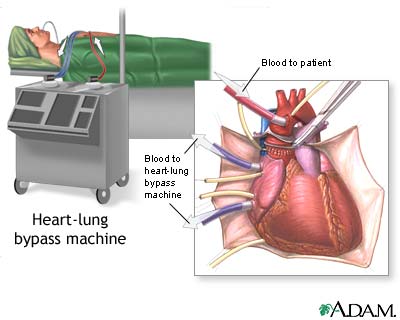
While the patient is deep asleep and pain-free (general anesthesia), an incision is made through the breast bone (sternum). The patient's blood is re-routed through tubes to a heart-lung bypass machine to keep the blood oxygen-rich and circulating. The patient's diseased heart is removed and the donor heart is stitched in place.
Review Date 4/16/2023
Updated by: Mary C. Mancini, MD, PhD, Cardiothoracic Surgeon, Shreveport, LA. Review provided by VeriMed Healthcare Network. Also reviewed by David C. Dugdale, MD, Medical Director, Brenda Conaway, Editorial Director, and the A.D.A.M. Editorial team.