



Overview
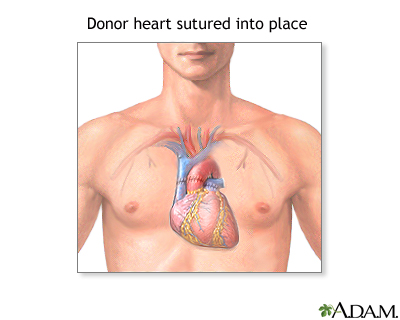
Heart transplant prolongs the life of a patient who otherwise would die. About 80% of heart transplants are alive two years after the operation. The main problem, as with other transplants, is the rejection of the new heart. If rejection can be controlled, then survival can be increased up to 10 years or more. Immunosuppressive drugs must be taken indefinitely. Relatively normal activities can resume as soon as the patient feels well enough and after consulting with his or her doctor. However, vigorous physical activities should be avoided.
The major problems are the same all major organ transplants face:
- A shortage of donor hearts
- Rejection of the transplanted heart
- Cost of the surgery and post-operative care, including immunosuppressive drugs
Review Date 4/16/2023
Updated by: Mary C. Mancini, MD, PhD, Cardiothoracic Surgeon, Shreveport, LA. Review provided by VeriMed Healthcare Network. Also reviewed by David C. Dugdale, MD, Medical Director, Brenda Conaway, Editorial Director, and the A.D.A.M. Editorial team.