



Page 1 of 1
19th Century Schedule
- Not part of the main NLM Classification
- Accessible via a link from the NLM Classification homepage:
https://classification.nlm.nih.gov/19century_schedule
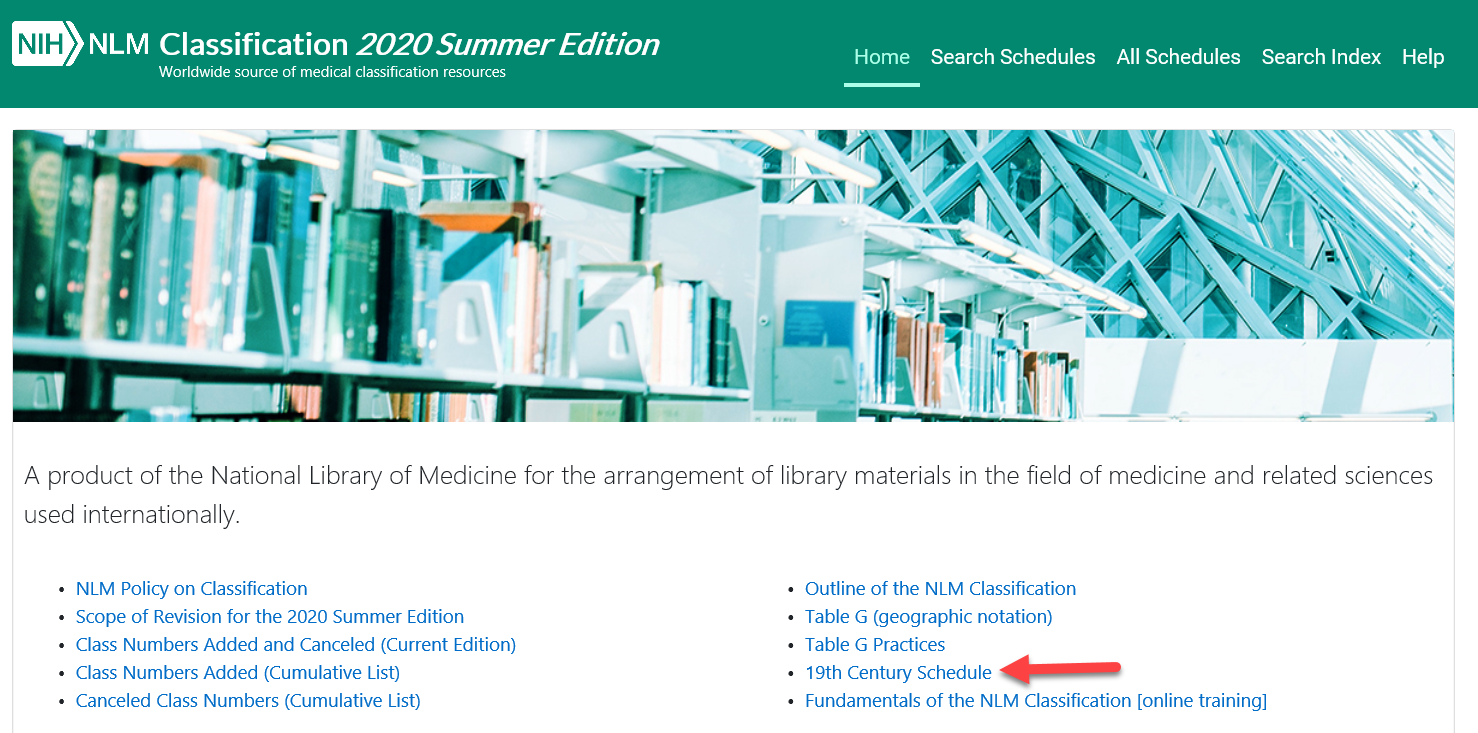
- Simplified subject classification developed in 1956 that is derived from the letters that represent the preclinical and clinical subjects covered by the NLM Classification used for 19th century (1801-1913) materials. Used for monographs and serials (Exception: bibliographies follow the classification for modern bibliographies (Cf. Module 7—Bibliographies and Related Materials)
- Mostly limited to combinations of letters
- QS, QSA, QSB, QT, etc.
- Exceptions:
- W1-6, W 26, W 600, WX 2, and form number 22 appearing throughout the schedule
- In addition, the entire WZ schedule is used for non-clinical19th century works
- When the subject falls outside of the scope of the schedules of the NLM Classification, only the letters of the LC schedule representing the subject are used
- Examples:
- BF for Psychology
- SF for Veterinary Medicine
- Examples:
- Also used for facsimiles and reprints of works published between 1801-1913
- Classify here translations of works originally published from 1801-1913 only if the translation itself is published from 1801-1913
Last Reviewed: April 16, 2021