



Current guidelines recommend that people with coronary artery disease (CAD) receive antiplatelet therapy with either aspirin or clopidogrel.
Aspirin therapy is very helpful for people with CAD or a history of stroke. If you have been diagnosed with CAD, your health care provider may recommend that you take a daily dose (from 75 to 162 mg) of aspirin. A daily dose of 81 mg is recommended for people who have had angioplasty (also called PCI). It is most often prescribed along with another antiplatelet medicine. Aspirin can reduce the risk for heart attack and ischemic stroke. However, using aspirin over the long-term can raise your risk for stomach bleeding.
Daily aspirin should not be used for prevention in healthy people who are at low risk for heart disease. You provider will consider your overall medical condition and risk factors for heart attack before recommending aspirin therapy.
How Aspirin Helps you
Taking aspirin helps prevent blood clots from forming in your arteries and may help lower your risk for a stroke or heart attack.
Your provider may recommend to take daily aspirin if:
- You do not have a history of heart disease or stroke, but you are at high risk for a heart attack or stroke. (These recommendations sometimes change as new information becomes available.)
- You have been diagnosed with heart disease or stroke already.
Aspirin helps get more blood flowing to your legs. It can treat a heart attack and prevent blood clots when you have an abnormal heartbeat. You probably will take aspirin after you have treatment for clogged arteries.
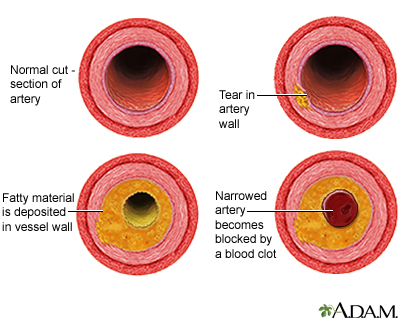
You will most likely take aspirin as a pill. A daily low-dose aspirin (75 to 81 mg) is most often the first choice for preventing heart disease or stroke.
Talk to your provider before taking aspirin every day. Your provider may change your dose from time to time.
Side Effects
Aspirin can have side effects such as:
- Diarrhea
- Itching
- Nausea
- Skin rash
- Stomach pain
Before you start taking aspirin, tell your provider if you have bleeding problems or stomach ulcers. Also say if you are pregnant or breastfeeding.
Taking Aspirin
Take your aspirin with food and water. This can reduce side effects. You may need to stop taking this medicine before surgery or dental work. Always talk to your provider before you stop taking this medicine. If you have had a heart attack or a stent placed, be sure to ask your heart doctor if it is OK to stop taking aspirin.
You may need medicine for other health problems. Ask your provider if this is safe.
If you miss a dose of your aspirin, take it as soon as possible. If it is time for your next dose, take your usual amount. Do not take extra pills.
Store your medicines in a cool, dry place. Keep them away from children.
When to Call the Doctor
Contact your provider if you have side effects.
Side effects can be any signs of unusual bleeding:
- Blood in the urine or stools
- Nosebleeds
- Unusual bruising
- Heavy bleeding from cuts
- Black tarry stools
- Coughing up blood
- Unusually heavy menstrual bleeding or unexpected vaginal bleeding
- Vomit that looks like coffee grounds
Other side effects can be dizziness or difficulty swallowing.
Contact your provider if you have wheezing, breathing difficulty, or tightness or pain in your chest.
Side effects include swelling in your face or hands. Call your provider if you have itching, hives, or tingling in your face or hands, very bad stomach pain, or a skin rash.
Alternative Names
Blood thinners - aspirin; Antiplatelet therapy - aspirin

References
Amsterdam EA, Wenger NK, Brindis RG, et al. 2014 AHA/ACC guideline for the management of patients with non-ST-elevation acute coronary syndromes: a report of the American College of Cardiology/American Heart Association Task Force on practice guidelines. J Am Coll Cardiol. 2014;64(24):e139-e228. PMID: 25260718 pubmed.ncbi.nlm.nih.gov/25260718/.
Bohula EA, Morrow DA. ST-Elevation Myocardial Infarction: Management. In: Libby P, Bonow RO, Mann DL, Tomaselli GF, Bhatt DL, Solomon SD, eds. Braunwald's Heart Disease: A Textbook of Cardiovascular Medicine. 12th ed. Philadelphia, PA: Elsevier; 2022:chap 38.
Fihn SD, Blankenship JC, Alexander KP, et al. 2014 ACC/AHA/AATS/PCNA/SCAI/STS focused update of the guideline for the diagnosis and management of patients with stable ischemic heart disease. Circulation. 2014;130(19):1749-1767. PMID: 25070666 pubmed.ncbi.nlm.nih.gov/25070666/.
Giugliano RP, Braunwald E. Non-ST Elevation acute coronary syndromes. In: Libby P, Bonow RO, Mann DL, Tomaselli GF, Bhatt DL, Solomon SD, eds. Braunwald's Heart Disease: A Textbook of Cardiovascular Medicine. 12th ed. Philadelphia, PA: Elsevier; 2022:chap 39.
Kumbhani DJ, Bhatt DL. Percutaneous coronary intervention. In: Libby P, Bonow RO, Mann DL, Tomaselli GF, Bhatt DL, Solomon SD, eds. Braunwald's Heart Disease: A Textbook of Cardiovascular Medicine. 12th ed. Philadelphia, PA: Elsevier; 2022:chap 41.
Morrow DA, de Lemos J. Stable Ischemic Heart Disease. In: Libby P, Bonow RO, Mann DL, Tomaselli GF, Bhatt DL, Solomon SD, eds. Braunwald's Heart Disease: A Textbook of Cardiovascular Medicine. 12th ed. Philadelphia, PA: Elsevier; 2022: chap 40:739-785.
Mora S, Libby P, Ridker PM. Primary prevention of cardiovascular disease. In: Libby P, Bonow RO, Mann DL, Tomaselli GF, Bhatt DL, Solomon SD, eds. Braunwald's Heart Disease: A Textbook of Cardiovascular Medicine. 12th ed. Philadelphia, PA: Elsevier; 2022:chap 25.
O'Gara PT, Kushner FG, Ascheim DD, et al. 2013 ACCF/AHA guideline for the management of ST-elevation myocardial infarction: executive summary: a report of the American College of Cardiology Foundation/American Heart Association Task Force on practice guidelines. Circulation. 2013;127(4):529-555. PMID: 23247303 pubmed.ncbi.nlm.nih.gov/23247303/.
US Preventative Services Task Force; Davidson KW, Barry MJ, Mangione CM, et al. Aspirin use to prevent cardiovascular disease US Preventive Services Task Force Recommendation Statement. JAMA. 2022;327(16):1577-1584. PMID: 35471505 pubmed.ncbi.nlm.nih.gov/35471505/.
Read More
- Angina
- Angioplasty and stent placement - carotid artery
- Angioplasty and stent placement - peripheral arteries
- Aortic valve surgery - minimally invasive
- Aortic valve surgery - open
- Atherosclerosis
- Cardiac ablation procedures
- Carotid artery surgery - open
- Coronary heart disease
- Heart bypass surgery
- Heart bypass surgery - minimally invasive
- Heart pacemaker
- High blood cholesterol levels
- High blood pressure in adults – hypertension
- Implantable cardioverter-defibrillator
- Mitral valve surgery - minimally invasive
- Mitral valve surgery - open
- Peripheral artery bypass - leg
Patient Instructions
- ACE inhibitors
- Angina - discharge
- Angina - what to ask your doctor
- Angina - when you have chest pain
- Angioplasty and stent - heart - discharge
- Angioplasty and stent placement - carotid artery - discharge
- Angioplasty and stent placement - peripheral arteries - discharge
- Antiplatelet drugs - P2Y12 inhibitors
- Atrial fibrillation - discharge
- Being active after your heart attack
- Being active when you have heart disease
- Butter, margarine, and cooking oils
- Cardiac catheterization - discharge
- Carotid artery surgery - discharge
- Cholesterol and lifestyle
- Controlling your high blood pressure
- Dietary fats explained
- Fast food tips
- Heart attack – discharge
- Heart attack - what to ask your provider
- Heart bypass surgery - discharge
- Heart bypass surgery - minimally invasive - discharge
- Heart disease - risk factors
- Heart failure - discharge
- Heart failure - fluids and diuretics
- Heart failure - home monitoring
- Heart failure - what to ask your doctor
- Heart valve surgery - discharge
- How to read food labels
- Mediterranean diet
- Peripheral artery bypass - leg - discharge
- Stroke - discharge
Review Date 8/16/2022
Updated by: Michael A. Chen, MD, PhD, Associate Professor of Medicine, Division of Cardiology, Harborview Medical Center, University of Washington Medical School, Seattle, WA. Also reviewed by David C. Dugdale, MD, Medical Director, Brenda Conaway, Editorial Director, and the A.D.A.M. Editorial team.